The Great Fibre Renaissance
How Chialove will change the way you make breakfast.
Like everyone, you’ve probably seen the protein-packed bars. The protein Kraft Dinner. The protein Doritos. The protein soda. All right, we’re joking about the last one, but the fact remains: proteins are everywhere, and they’re on the tip of everyone’s tongue. Don’t get us wrong: proteins are essential. But in the Standard North American Diet (sometimes referred to, perhaps accordingly, as SAD), we don’t normally lack any proteins. On the contrary, we eat plenty. What we lack is fibre.
And while it is true that there are a lot of fibre claims on packages, whether exaggerated or not, the general public is still not fully aware of what fibre does for us. We know it’s important, but we don’t really know why beyond the fact that it supports a good digestive system.
But fibre does so much more than that. Fibre feeds the microorganisms in our gut, helps us feel full for longer and can slow the absorption of sugar into the bloodstream. In Canada, the recommended intake is around 25 g a day for women and 38 g for men, depending on age—but most Canadians get roughly half that amount.
Beyond this introduction, this article is not going to compare fibre to protein. Both are an essential part of a healthy diet. We aim to dive a little deeper into the beautiful world of fibres, how they feed your microbiome, and why eating more might be easier than you think.
The Unsung Hero of Nutrition
First of all, what are fibres? The easiest way to think about fibre is as the part of plant foods our bodies can’t fully digest. That might sound like a limitation… but that’s actually the point. Because you are not the one who’s actually eating the fibres.
You will be pleased to learn that there’s a sprawling community of microorganisms living in your digestive tract. Fibre gives many of those microbes and bacteria something to eat. As they ferment certain types of fibre, they produce short-chain fatty acids and other compounds that are being studied for their roles in gut and overall health. If we simplify things: fibres are food for your good microbes. In exchange, those good microbes give you many nutrients and help support your health. That’s a pretty good deal.
And your gut isn’t home to one giant blob of identical bacteria. Different microbes thrive on different types of fibre, which is one reason variety matters. Some fibres dissolve in water, while others don’t. Soluble fibre can form a gel-like substance in the digestive tract, slowing digestion and helping regulate blood glucose and cholesterol. Insoluble fibre adds bulk and helps move things through the digestive system.
The diversity is almost as important as the fibre itself. Different plants contain different fibres, and different microbes use different fibres. The more varied your diet, the more varied the buffet you’re offering your gut microbiome, and this microbiome is part of the conversation about health now. We’re learning more about the relationship between our gut microbes, what we eat and the rest of the body. There’s even growing interest in the gut-brain connection, although plenty remains to be understood. Fibre sits right in the middle of all of this. And suddenly, the humble breakfast of overnight oats starts looking a little more interesting.
So… Why Is It So Hard To Eat More of It?
Now, we know you don’t need another lecture about eating more vegetables. Chances are you’ve had the talk before. We know beans are good for us. We know fruit juice is not as good as it seems to be on the label. So what’s keeping us from actually eating close to the 30 required grams of fibre every day?
Because fibre-rich food gets in the way of our modern, fast-paced lifestyle. We don’t have time to soak dried beans or to cook grains for an hour after work. We don’t have time to prepare breakfast when we need to catch the 7 am bus. Modern life, it seems, has become exceptionally good at removing preparation from the food. That’s the idea, at least. But it’s also an oversimplification. We’re not going to argue against the power of convenience. Rather, we’ll argue that good food can absolutely fit into it.
We can know exactly what we should be eating and still not eat it. But that’s where we need to look at this whole situation from the perspective of behavioural nutrition rather than mere nutrition. The easier a habit is to repeat, the more likely we are to repeat it. And if we also happen to enjoy it? Even better.
Which brings us to chia. And more specifically, to Chialove.
Just Add Water
Chia has been cultivated and eaten for centuries. It’s naturally rich in fibre and contains plant-based omega-3 fatty acids and protein. It also has a particularly useful party trick: when exposed to liquid, chia absorbs it and develops a gel-like texture. That same quality contributes to the way soluble fibre can slow digestion and support feelings of fullness.
On paper, chia is basically nutrition's overachiever. And while we’re not going to dare use the word superfood, a classic marketing term we’d rather avoid, we cannot deny the absolute power of this tiny, tiny seed. Chia also happens to fit rather neatly into the way we think about food today. More fibre, more plants, more whole foods. Convenient nutrition that doesn't require an entire Sunday afternoon of meal prep.
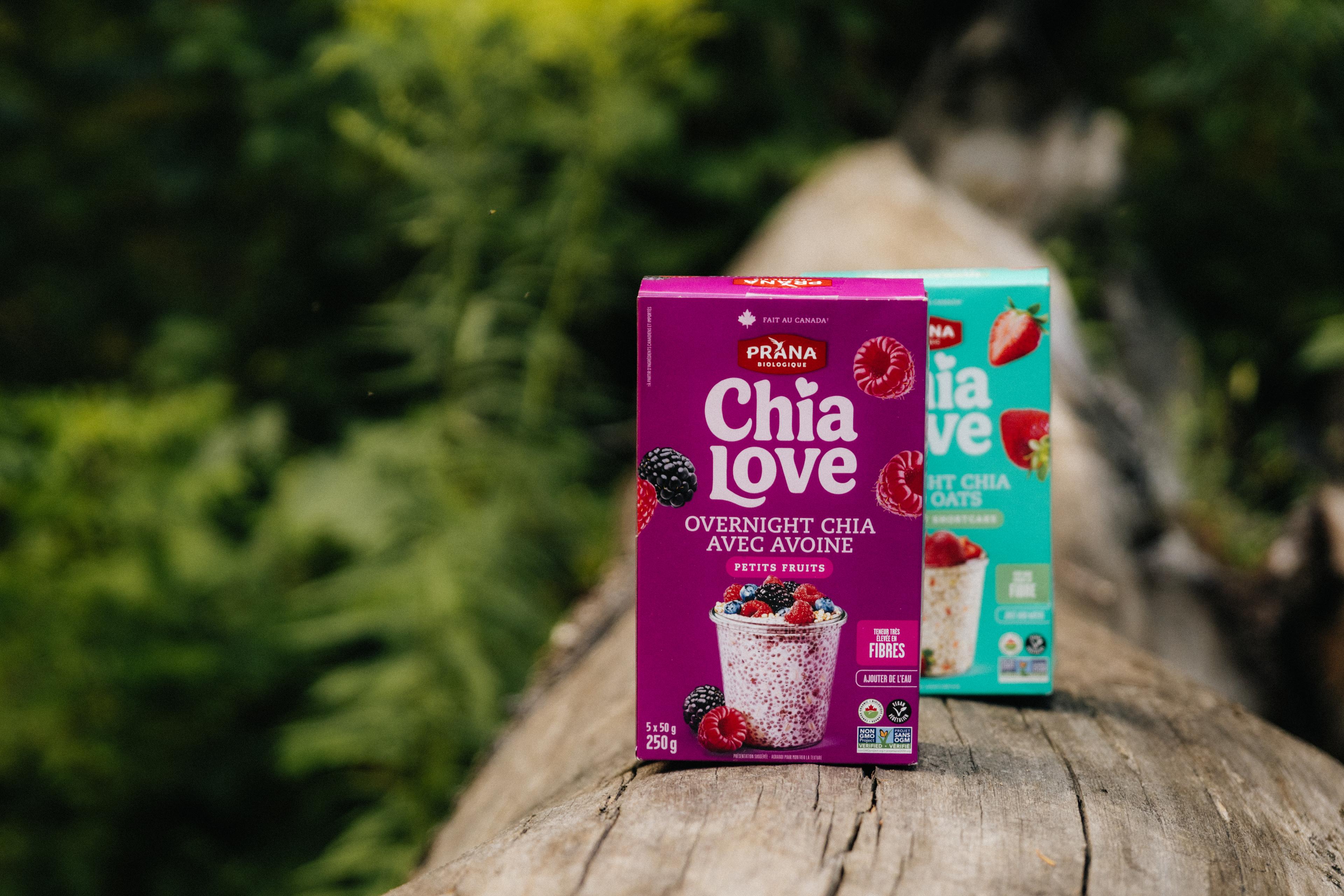
This is where Chialove comes in. The idea is very simple and you’re probably already familiar with it: overnight oats. With chia, that is. Chialove takes chia, oats and plant-based milk, adds flavour such as berries, apples or chocolate, and packages it all into a very simple, convenient product. All you have to do is add water, leave it in the fridge overnight (or at least for 3 hours). Each serving provides 12 g of protein and 8 g of fibre, according to the product brief.
No blender. No chopping board. No staring into the refrigerator for what seems like hours. And the best part? It’s actually good! This is important because fibre shouldn't become another nutritional box to check. If a food is good for you but you don't actually like eating it, you’re never going to succeed in making it a part of your life.
Chialove takes fibre out of the “I should probably eat more of this” category and puts it somewhere much more useful: something you might genuinely look forward to eating. You wake up, you eat, you’re ready for your day. There’s also plenty of ways to mix things up. We love adding it to Greek yogurt, for instance, or adding various nuts and seeds (the Apple Crumble flavour goes particularly well with walnuts).
Let’s Make Fibre Cool Again
Fibre is already having its comeback.
After years of protein dominating everything from grocery-store shelves to social media feeds, consumers are starting to look elsewhere. NIQ reports that more than one-third of shoppers are actively trying to increase their fibre intake. That’s a pretty significant number of people thinking about something that, until recently, mostly lived on the side of a cereal box.
The renewed interest also fits into a broader shift in how we talk about nutrition. We’re paying more attention to the quality and variety of our food, to the microbiome, and to the relationship between diet and long-term health. Fibre happens to sit at the intersection of all three.
But there’s no need to replace the protein obsession with a fibre obsession. Protein matters. Carbohydrates matter. Fat matters. Fibre matters. So do all the vitamins, minerals and other compounds we get from eating a varied diet. What Chialove offers is a very good start on all of these. A bowl of overnight oats doesn't need to be a nutritional optimization project. It can just be a simple breakfast that becomes a part of your routine, whether it’s for a regular morning or in the outdoors.
Fibre for Whatever the Day Has in Store
Fibre belongs in the everyday picture of nutrition for active people. It contributes to digestive health and satiety, while fibre-rich foods often bring along plenty of other nutrients. That doesn’t mean eating a huge bowl of chia immediately before a hard effort. A sudden increase in fibre can cause digestive discomfort, and individual tolerance varies. Before intense or prolonged exercise, lower-fibre foods may simply feel better.
In any case, most of us aren’t eating breakfast five minutes before dropping into a couloir or starting a 30-kilometre run. We’re eating it at home, in the kitchen, half-awake, looking at the weather and deciding whether we need another layer.
Breakfast is part of the preparation. Chialove makes that preparation pretty simple. Make it the night before, put it in the fridge, and eat it in the morning. Then grab your coffee, pack your bag and get outside.
That’s it.
Tags
Recent Articles