Thomas Fafard: The New King of Quebec's Marathon Scene
Interview with the Olympian runner.
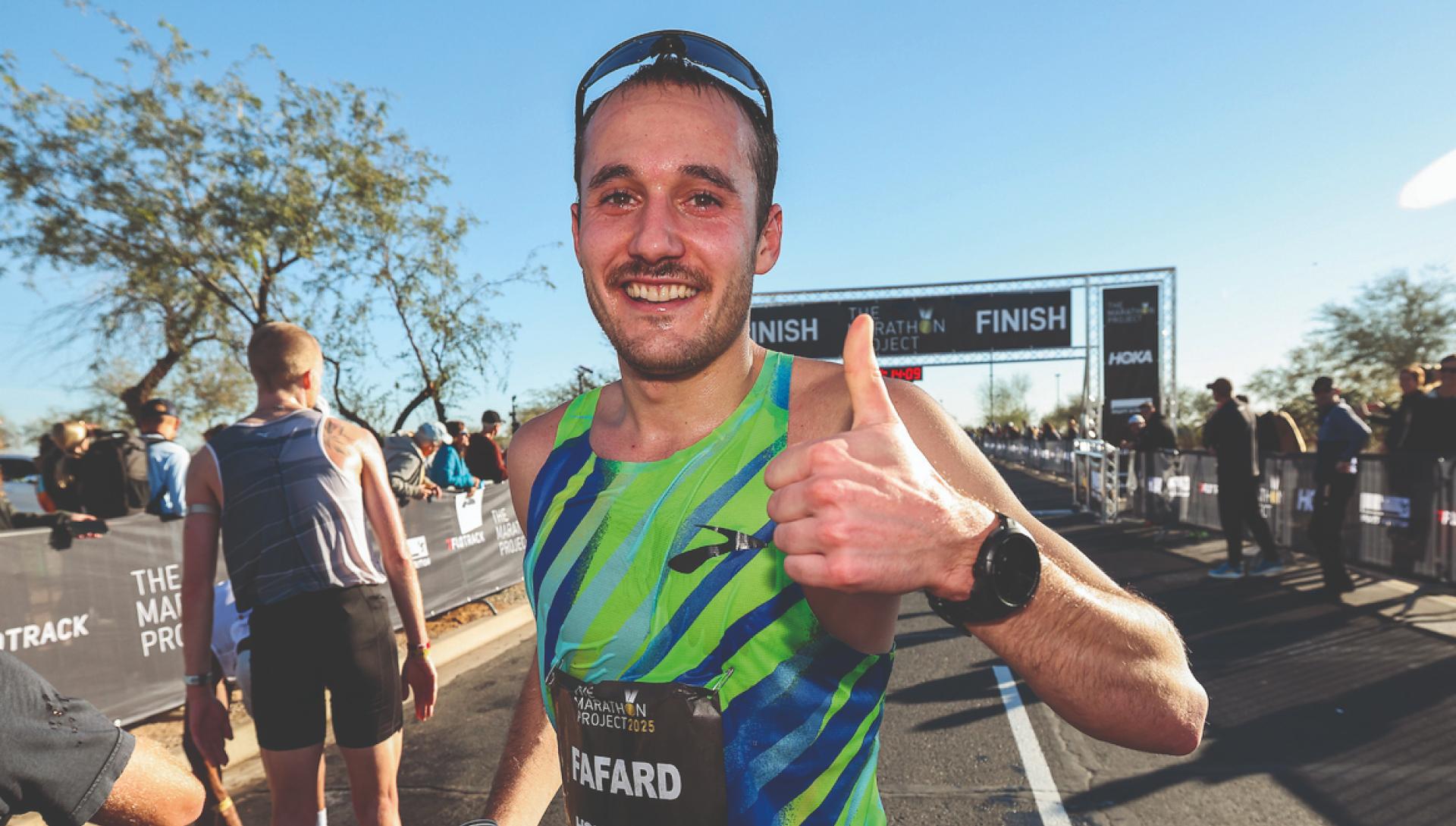
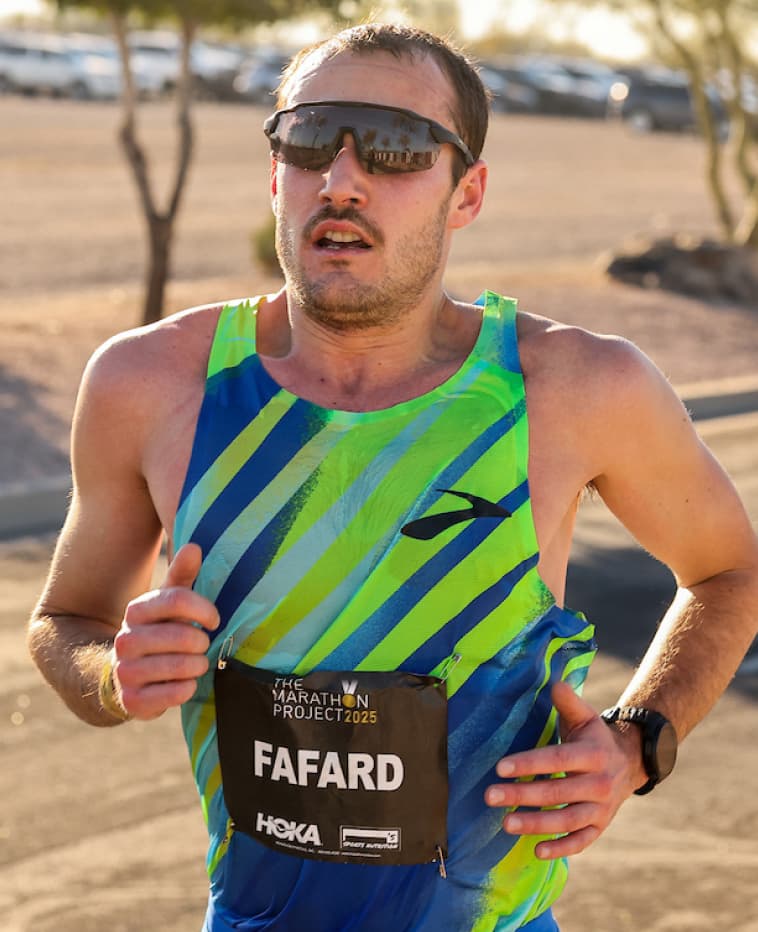
It took just two hours and ten minutes to change forty years of history. By taking on the Quebec marathon record, set in 1984 by Alain Bordeleau, Thomas Fafard didn’t just change disciplines; he redefined his relationship with time.
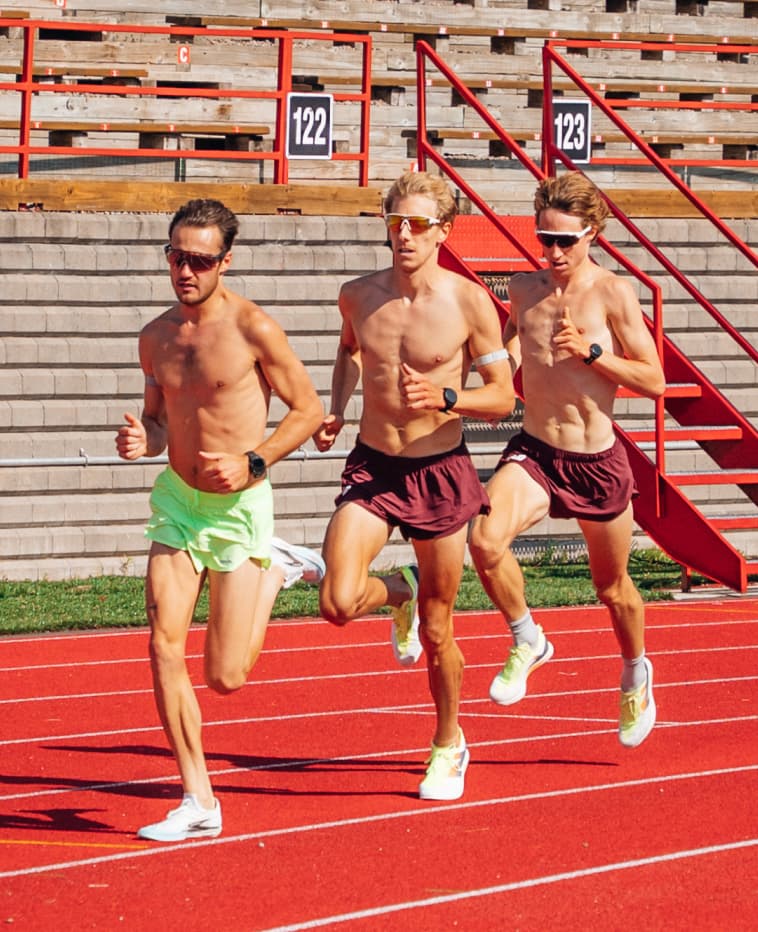
You come from a discipline where everything is decided almost down to a tenth of a second. Has becoming a marathoner changed your relationship with time?
The only time my track career truly came down to that level of precision was in a race where I ran 13:05.07 and missed the Olympic standard by just 0.07 seconds. That said, my transition hasn’t fundamentally changed my relationship with time. On the road, it’s more tied to a mental reference point—especially the pace I keep in mind, around 3:05 per kilometre. Overall, my perception of time is less precise than a tenth of a second, and the marathon, by its nature, is a race that’s less tight when it comes to timing.
Were there track running habits you had to unlearn?
One of the main adjustments compared to track racing concerns the importance given to split times. In the marathon, you can’t rely solely on kilometre splits, because the race is too long to approach with the same precision as on the track, where you analyze every 200 metres. It’s much more relevant to run with the group's energy.
Over 5,000 metres, the pain is more explosive. In the marathon, it can build gradually and last over a much longer period. What has your experience been?
The big difference in pain between the 5,000 metres and the marathon is that the marathon was relatively easy for much of the race. Up until about 35 kilometres, everything went pretty smoothly, which was a pleasant surprise. In contrast, the last twenty minutes were extremely tough. It was mostly a mental battle; my legs really wanted to stop running.
So, you hit a wall at 35 km… What happened?
My legs and body gradually started to give out, so it became difficult to maintain pace. After around 37 kilometres, this feeling became permanent. I then slowed down by several seconds every kilometre, and the “wall” was felt mostly in my muscles. I was still in control of my breathing—even to the point that my heart rate actually dropped at the end of the race—but that was simply because my muscles were just no longer able to sustain the pace.
Which strategic decision during the race had the biggest impact on your Quebec record? Can you pinpoint a specific moment or strategy that helped you?
Everything was decided in the first ten seconds of the race. With my coach, the plan was to start at a 2:12 pace by staying with the third group. However, in my mind, I was aiming for a pace closer to 2:10, so at the starting line I chose to go with the 2:10 pack. Looking back, this was the right decision because it allowed me to set the Quebec record and run faster than we had planned.
Over time and with experience, has your approach to nutrition become more scientific or more instinctive?
From a nutrition standpoint, I’ve been using gels or energy drinks during or around my training for several years now. This habit clearly helped execute the marathon smoothly. The approach was both scientific and instinctive: we knew the goal was to consume a gel roughly every five kilometres. However, due to the race setup, the nutrition stations were only available each lap, about every seven kilometres. I didn’t take any liquids during the race, out of fear of cramping or having to stop, and only used Precision Fuel gels, each containing 30 grams of carbohydrates.
Why make this transition at this point in your career? Is there something in the marathon that you don’t find on the track?
I believe it was the right time. Of course, some track goals weren’t achieved, and I would have liked to reach them, but that’s part of an athlete’s journey. By nature, we are eternally unsatisfied. With the goal of qualifying for the 2028 Los Angeles Olympics in the marathon event, it was essential that I start gaining experience at this distance now to maximize my chances of meeting the Olympic standard. Delaying this transition would likely have only compromised that ambition.
Breaking a record in your very first marathon—does it feel liberating or risky for what comes next? Will it be difficult to keep going after “succeeding on the first try?”
Breaking the Quebec record on my very first attempt was a huge relief. I don’t see it as a risk for the future, because even with such a strong first marathon, I’m aware there’s still plenty to improve on—whether in planning, nutrition, or training. It actually lays a solid foundation for the future and allows me to aim high. So this doesn’t create any stress for me. Looking ahead, I see a full transition to road racing by the end of 2026–2027, with the goal of qualifying for the marathon at the Los Angeles Olympics.
Recent Articles