Boréalys Mont-Tremblant by UTMB
The legendary race arrives in Quebec in 2026.
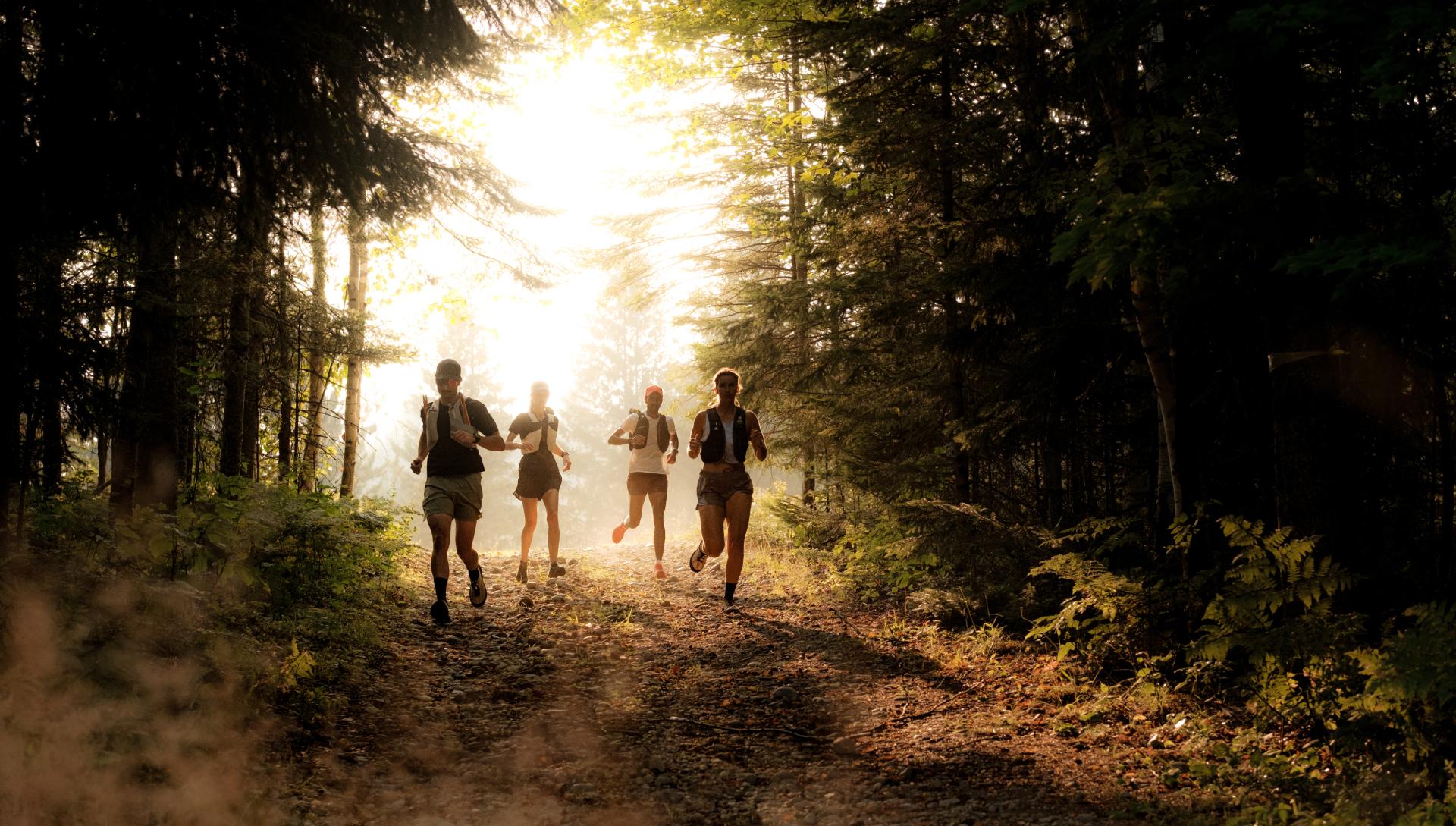
The UTMB World Series consists of races held worldwide and sanctioned by the Ultra-Trail du Mont-Blanc. By participating in these races, runners can increase their chances of competing in Chamonix by earning “Running Stones,” which serve as lottery tickets for the race bib draw.
For the first time this year, there will be a race in Quebec. The race is called Boréalys Mont-Tremblant by UTMB, and it’s organized by Événements Harricana. Ahead of this major debut, we had the chance to talk with the course designers about how it all came together. We don't want to give too much away, but you'll have read it here first: it's going to be tough.
Creating a Race Worthy of the Challenge
Frédéric Ménard is the race director of Boréalys Mont-Tremblant presented by UTMB. In his own words, his role is like that of a good father, ensuring that everyone—athletes, volunteers, and the logistics and medical teams—goes home with a smile. When he talks about it, you can sense his deep commitment to the running community and his wealth of experience. No wonder: he was at the helm of the Canadian Ski Marathon for 10 years and previously served as race director for the Transcharlevoix organized by Événements Harricana.
On the subject of events in the eastern part of the province, the organizers of Boréalys Mont-Tremblant by UTMB set themselves apart by focusing on the Laurentians. To design the course, Frédéric teamed up with Alexandre Provost, for whom this is his playground—and training ground. A native of Sainte-Agathe-des-Monts, Alexandre is an adventure runner. He discovered this somewhat unconventional sport around the turn of the century. Basically, the idea is to cover enormous distances in the wilderness by combining various sports disciplines, such as running, cycling, and canoeing. The routes aren’t marked like in trail running, and in many cases, you navigate using a map and compass…
The race route was designed based on the two partners’ passion for the region, as well as practical considerations, such as choosing accessible locations for aid stations and ensuring efficient logistics for medical evacuations. There's also the UTMB’s regulatory distance requirements to follow, notably that there should never be more than 15 kilometres between two aid stations. But it was also crucial for them to connect scenic viewpoints, to create a postcard-perfect effect that would leave a lasting impression on participants.
For this inaugural edition, the runners will follow a “looping” route, meaning they will branch out from a central point of interest and return to it several times—in this case, the hills of Mont-Tremblant. Although there is only one summit, Alexandre Provost points out that runners will reach it several times, each via a different route. In fact, the race will never pass the same point twice. That said, the proximity of certain segments of the route offers an interesting advantage: It'll be easy for spectators to move around and watch the runners pass by at multiple locations throughout the day. You can even take the gondola to bring your cheers all the way to the top.
Frédéric Ménard had to convince the UTMB Group that his concept would hold up. The French organization, accustomed to races that connect point A to point B, was initially hesitant. But the diversity of the terrain—ski trails, single track, hiking trails, rocks, and more—quickly reassured them all. Thibault Thomas is the Director of Global Operations for the UTMB Group. His role includes drafting the specifications for all World Series races and overseeing their implementation at events. What he found in Mont-Tremblant was a race that stands out for everything it offers within a relatively small area. This characteristic, which embodies the spirit of Quebec’s trails, quickly dispelled any initial reservations. In fact, he even suggests that this is what will make the race stand out on the circuit.
Level of Difficulty for the Region
The 80-kilometre Odyssée Boréale race is the first event at Boréalys Mont-Tremblant by UTMB. It falls into the UTMB’s 100-kilometre race category under the effort-kilometre system. This method of calculating distance adds one virtual kilometre for every 100 metres of elevation gain. Viewed from this perspective, the Odyssée Boréale is actually closer to 112 kilometres. This gives an idea of the terrain and the technical difficulty of the Mont-Tremblant race.
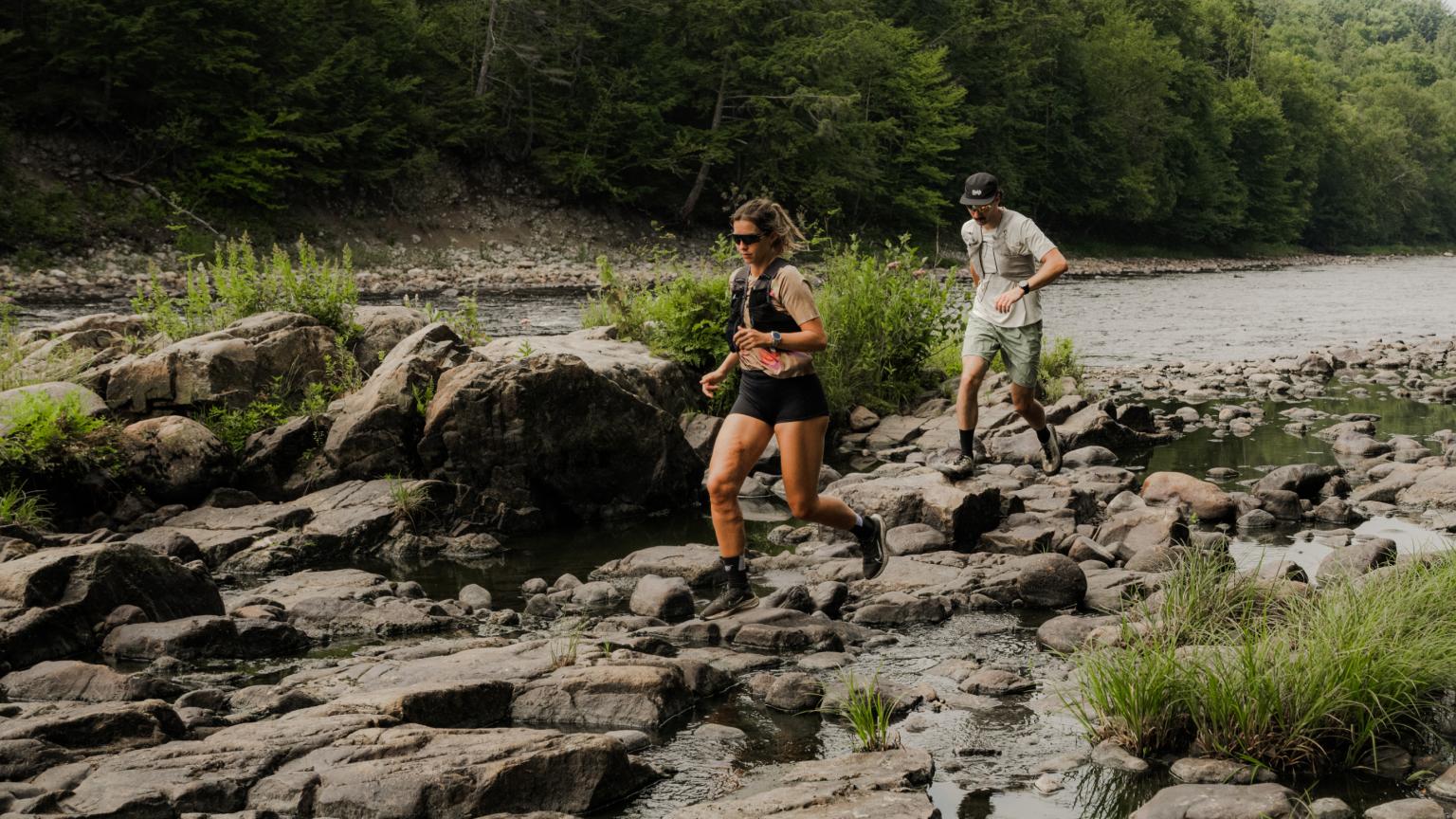
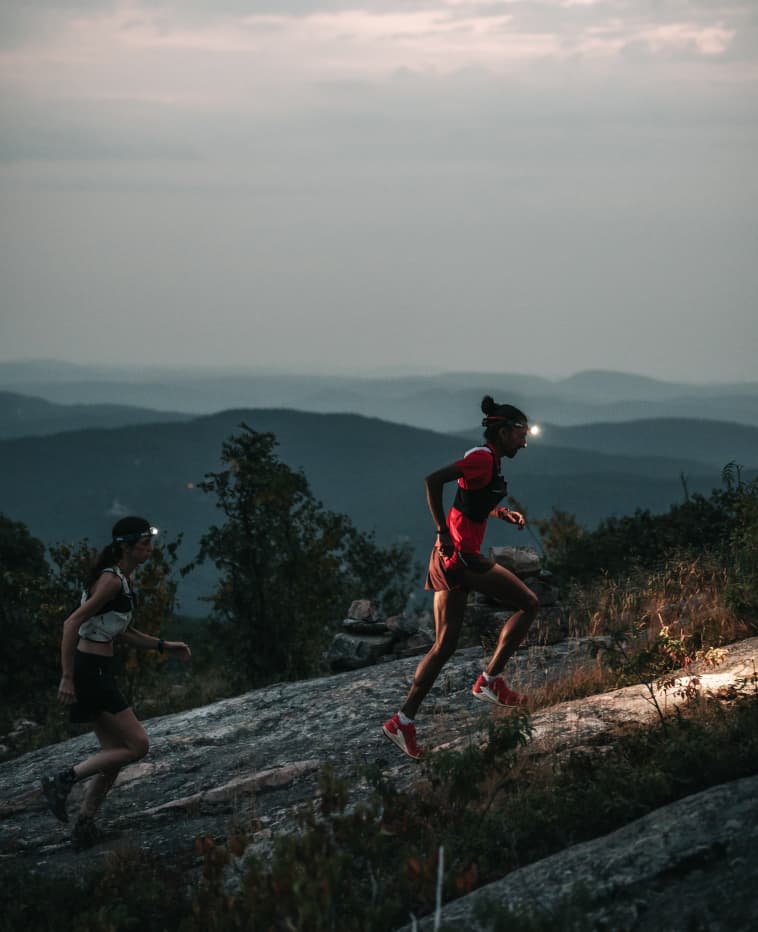
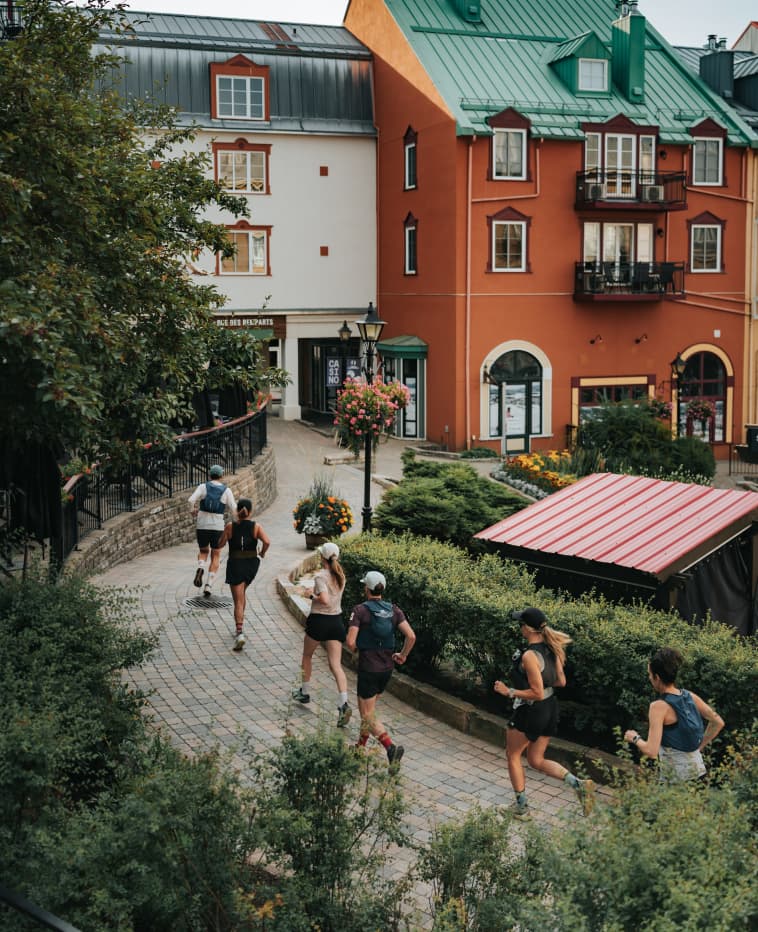
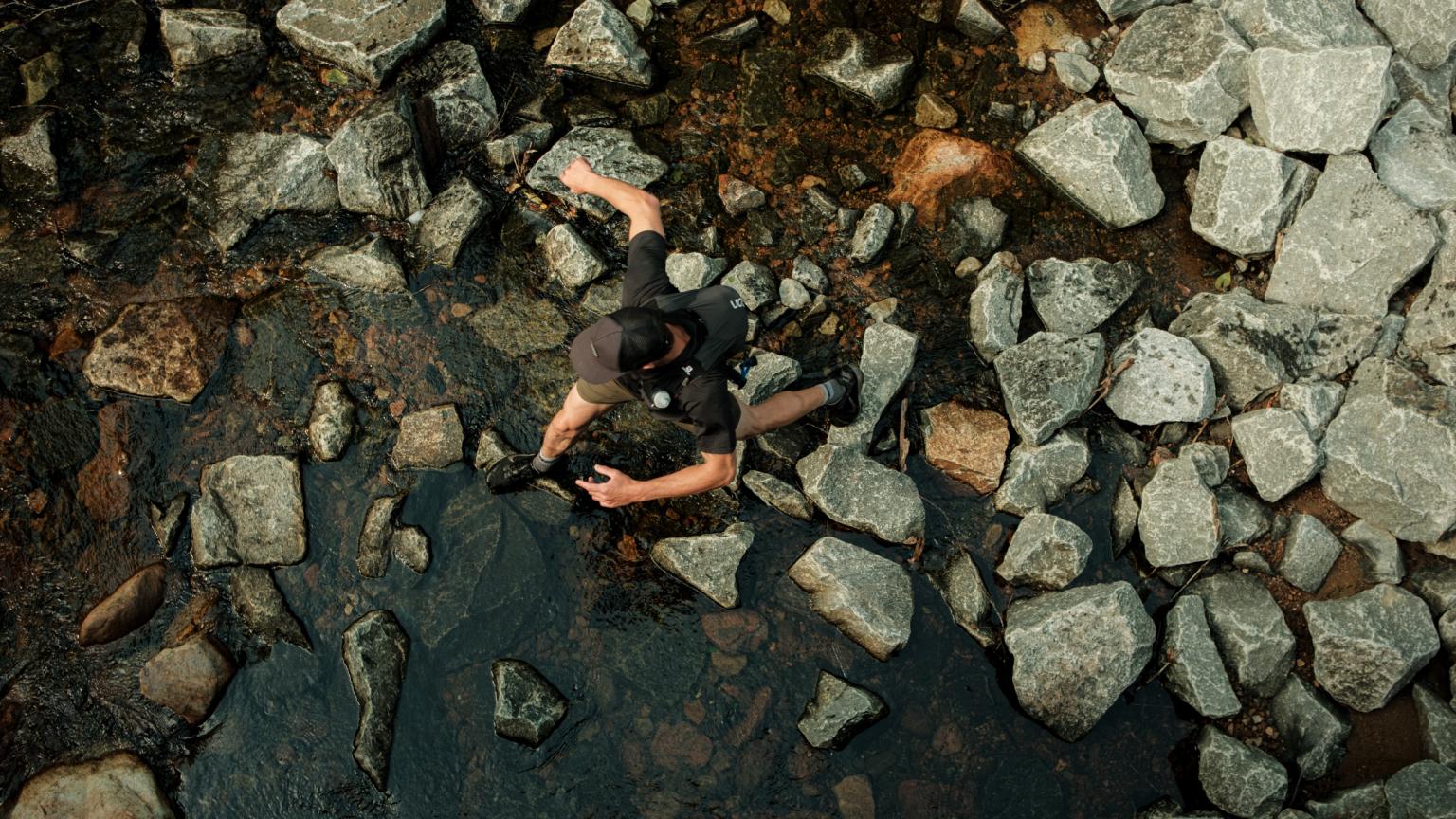
In fact, this region’s unique technical challenges inspired the design team, which chose to embrace them rather than try to contain them, in order to “respect the mountain,” as Frédéric Ménard put it. Alexandre Provost confirms that the terrain at Mont-Tremblant is challenging and that the course was designed to be tough. And even though it looks like a tourist spot down below, runners will quickly find themselves on truly isolated and technical trails. And the elevation gain is no joke. With 3,800 metres of climbing over 80 kilometres, no one is going to get away with it.
Samuel Matte-Thibault is the director of the Boréalys Mont-Tremblant by UTMB event and the general manager of Événements Harricana. His guidelines for designing the inaugural edition of this race were intended to ensure that the Running Stones were “earned,” as he puts it. Not with the goal of making the race harder than necessary, but to provide an authentic trail running experience. And as a qualifier for the UTMB, the race had to be worthy of the stakes.
To really understand the kind of adversity we’re talking about, consider this: After the official trial run last summer, conducted by elite athletes who thrive on such challenges, the team had to make changes because the course was too difficult and technical. Some sections were replaced, and two aid stations were added along the 80-kilometre route. As a result, the course length increased from 76 to 81 kilometres, but with a bit more rolling terrain.
Boréalys Mont-Tremblant by UTMB promises to be a race with no compromises: a challenging, technical course that stays true to the essence of Quebec’s trails. With panoramic views of the Laurentians and sections where each metre must be earned, the event looks set to be a memorable first edition.
And for runners eager for more, the next step is already taking shape behind the scenes: Événements Harricana is developing a 100-mile race for next year. This makes it clear that we’re not just talking about another race on the calendar, but the beginning of a true Quebec chapter in the UTMB universe.





Recent Articles